
A bag is the accessory most often bought from a photograph of the bag alone, which is exactly why the size is so often wrong when it arrives.
Seen against a full outfit, the same tote can read as a neat everyday bag or as luggage.

Scale against your frame
A bag looks balanced when its widest point stays inside the width of your torso. On a smaller frame an oversized tote reads as luggage no matter how good the leather is, which is the single thing a product photograph cannot show you.
Weigh it before you fill it
Empty weight is the number nobody checks and the one your shoulder carries all day. Thick vegetable tanned leather, heavy hardware and a structured base can make a modest bag heavy before anything goes inside. Hang it from one finger for thirty seconds. If that already feels like work, add a laptop, keys and a water bottle, then imagine an afternoon of walking with it.
Strap drop is worth measuring yourself. Drop means the vertical distance from the top of your shoulder to the top edge of the bag, and listings often give it. Measure from your own shoulder down to where you want the bag to sit and compare the two numbers. Photographs on tall models hide this completely, and it is the usual reason a bag arrives sitting wrong.
Where bags fail first
Failure points are predictable. Strap anchors, zips and bottom corners go before anything else does. Look closely where the strap joins the body: you want a reinforced patch, a rivet or dense bar tack stitching through several layers, not one row of thread punched through a single thin piece. Pull firmly on the strap and watch whether the leather around the anchor puckers or lifts.
Zips deserve a specific check. Run the slider end to end twice; it should move with even resistance and no snagging at the corners where the tape curves. Painted edges on straps and handles crack where they bend, so flex a strap sharply and look for hairline splits in the coating. Both faults get worse with use, and neither repairs cheaply.
| Shape | Holds | Best for |
|---|---|---|
| Tote | Laptop, folder, gym kit | Commuting and work |
| Shoulder bag | Wallet, phone, small extras | Everyday, dressed up or down |
| Crossbody | Essentials only | Travel, crowds, hands free |
| Clutch | Phone and card | Evening and formal |
| Bucket | More than it looks | Casual, soft outfits |
More bags to try on
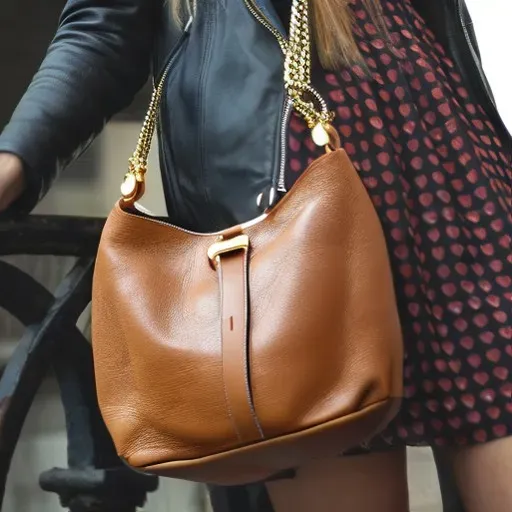 An oversized hobo bag in buttery tan leather
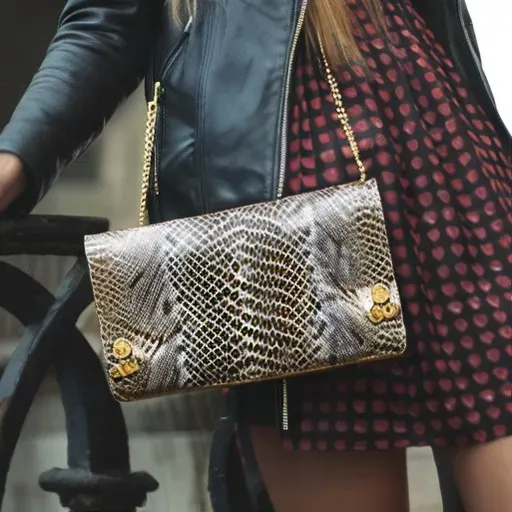 An exotic skin clutch
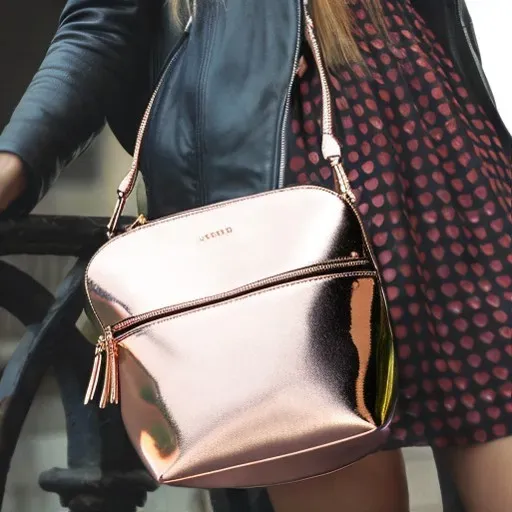 A trendy backpack in metallic rose gold
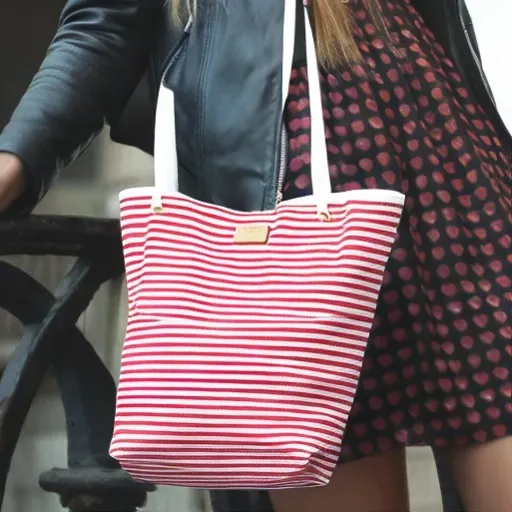 A bold statement tote in red and white stripes
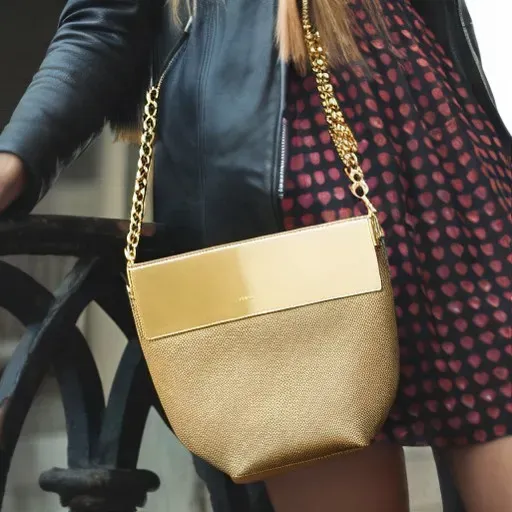 A sleek tote bag in jet black leather
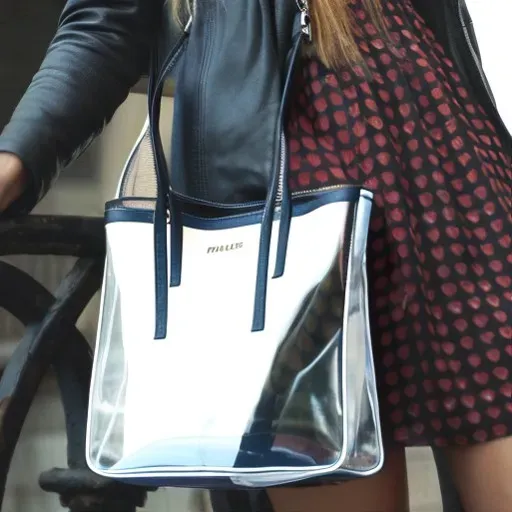 A trendy transparent tote
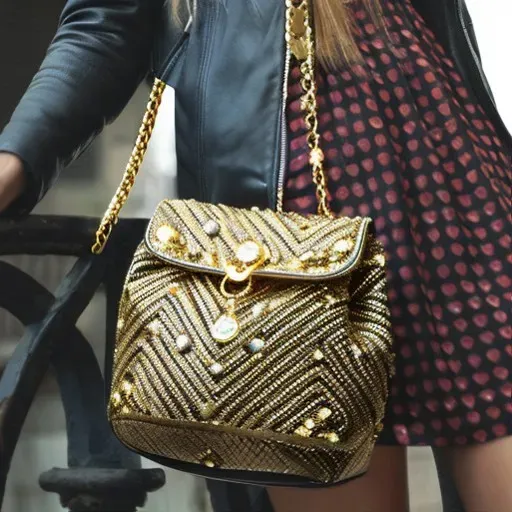 A luxe backpack in quilted black velvet
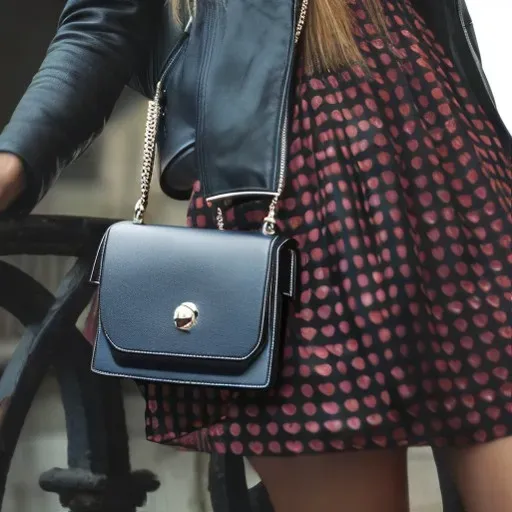 A sophisticated satchel in deep navy blue
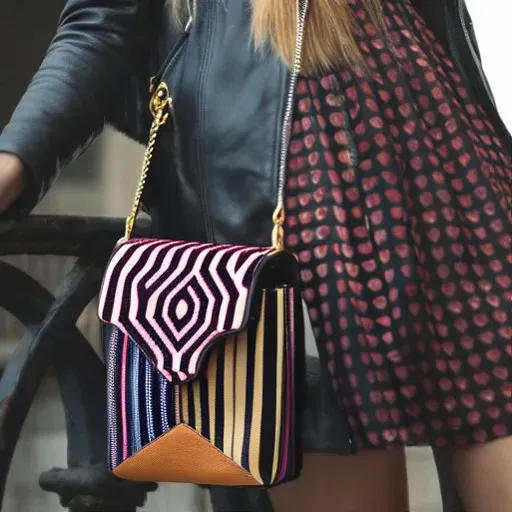 A high-fashion structured handbag
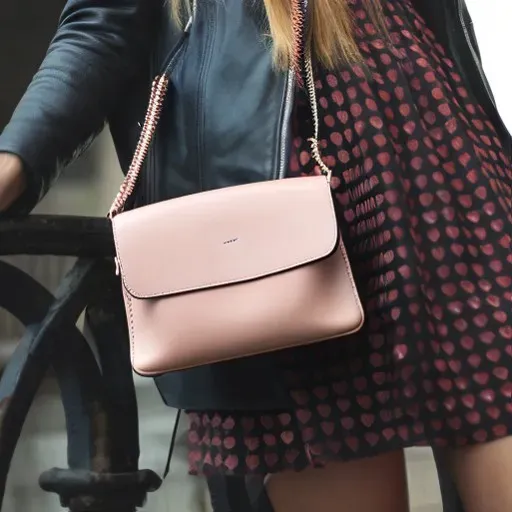 A minimalist sling bag in soft blush pink
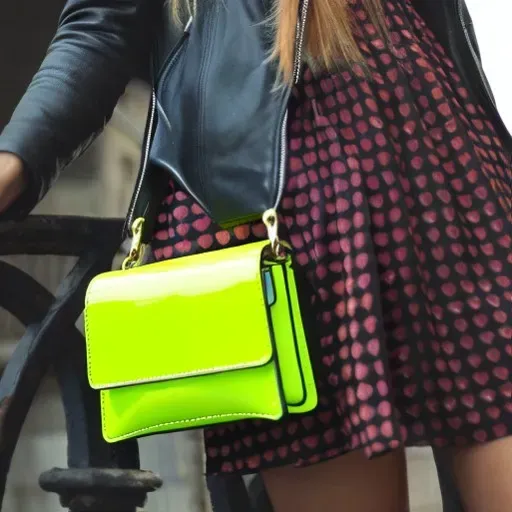 A statement-making belt bag in vibrant neon green
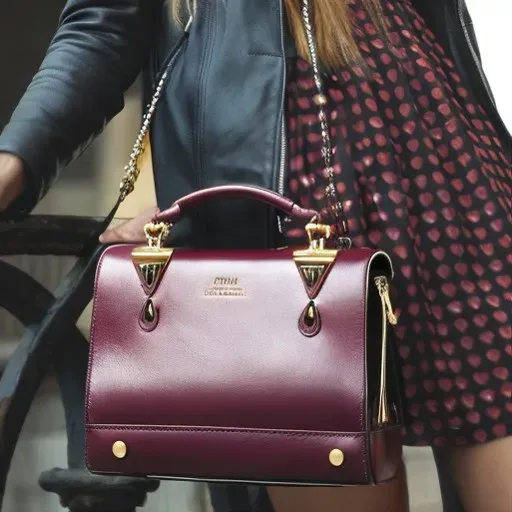 A vintage-style doctor bag in rich burgundy
Tap any look to open it in the app on your own photo.
Related
Questions people actually ask
What size tote actually works daily?
One that holds a laptop without the sides bowing. If the bag changes shape when loaded, it is too small for the job.
Crossbody or shoulder?
Crossbody distributes weight and stays put when you move. A shoulder bag is easier to get into and looks less utilitarian.
Do metal feet on the base matter?
They keep the bottom off wet pavements and cafe floors, and they spread wear over several small points instead of the corners. Bags without them scuff along the base first, which is permanent on pale leather. Look for feet on anything you will regularly set down on the ground.
How do I stop a tote sagging in the middle?
Soft leather and unstructured canvas collapse under weight, so a base insert or padded liner does most of the work. Carrying less does even more. For storage, stuff the bag with paper or fabric so it holds its shape instead of setting into a permanent fold.