
Bottoms are where fit arguments happen. Two pairs of trousers with the same waist measurement can read as completely different garments because of where the leg starts to widen.
These guides group them by that line, not by the label on the tag.

Examples from the blog


Rise decides more than the leg does
Rise is the distance from the crotch seam to the top of the waistband, and it sets where the garment divides your body. High rise sits at or just above the natural waist and makes the leg look longer. Low rise drops that division towards the hip and does the reverse, regardless of how the leg is cut.
Front rise is usually printed in centimetres on the product page, and it is the most useful number there. Compare it against a pair you already own and like. Two or three centimetres is the whole difference between a waistband that sits on your hip bones and one that sits near your navel.
Hem length is really a shoe decision
Trousers break where the hem meets the shoe. No break leaves the fabric just touching, half break puts one soft fold across the front, full break lets it pile. None of that can be judged in socks, so try trousers on with the shoes you actually plan to wear them with.
Skirts have the same problem in reverse. Hems that end exactly where a boot shaft begins create a hard line that chops the leg, and a midi with a flat can read shorter than a mini with a heel. Leave a clear gap or overlap properly, but avoid landing right on the join.
What the cloth does to an identical cut
Two pairs sewn from the same pattern behave differently depending on the weave. Rigid denim holds the shape it was built into and softens slowly. Cotton twill creases behind the knee. Wool suiting hangs from the hip and recovers overnight. Linen wrinkles the moment you sit down and is never going to stop.
Check the elastane percentage before anything else. One or two percent adds give and springs back. Much above five percent tends to feel wonderful in the shop and then bag out at the knee and seat by the end of a day, especially in a lighter weight fabric.
More trousers and skirts to try on
 Black leather pants with a glossy finish and zipper
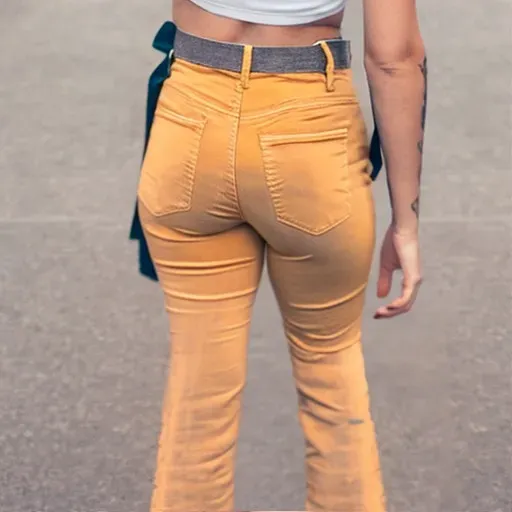 Mustard yellow corduroy pants with a straight fit
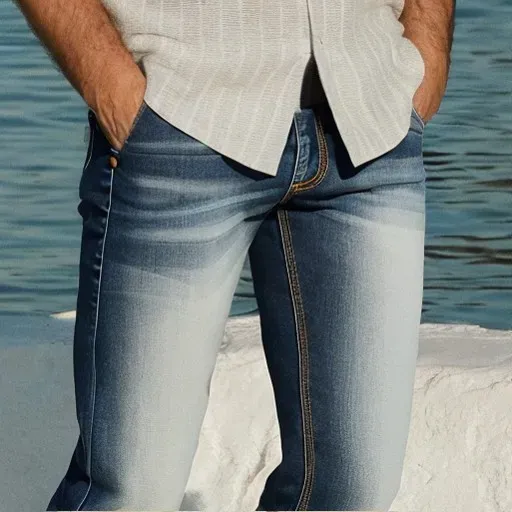 Dark wash straight-leg jeans
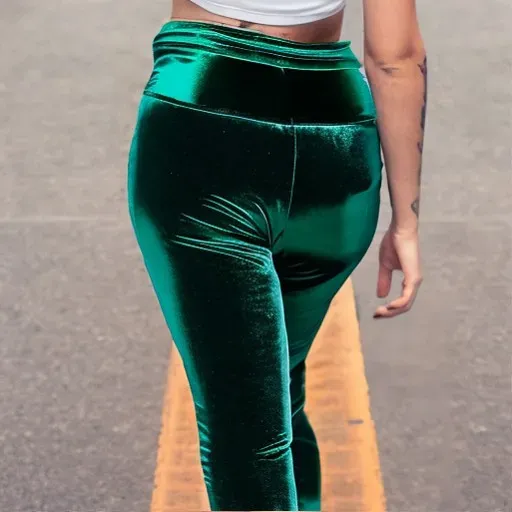 Emerald green velvet leggings
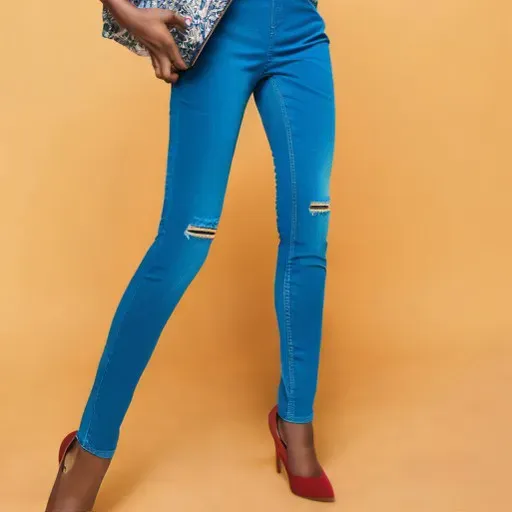 Electric blue
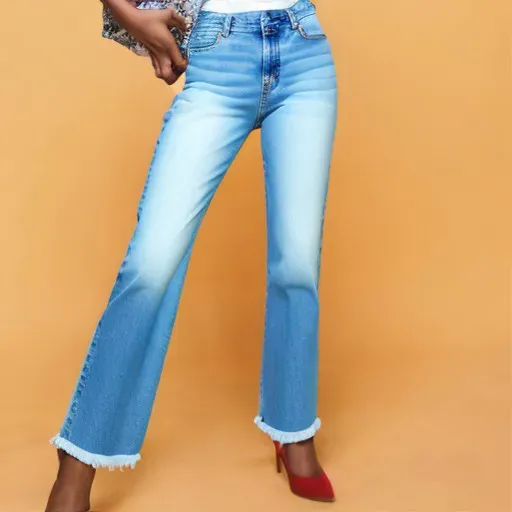 Light wash blue
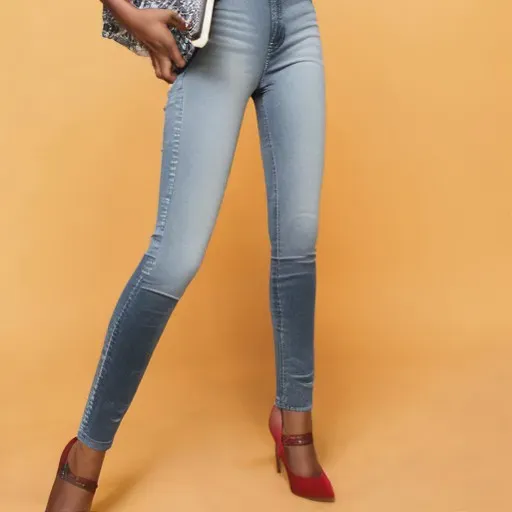 Acid wash grey
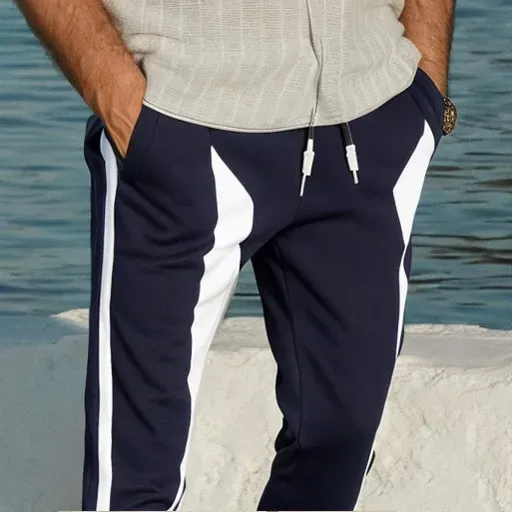 Navy blue joggers with white side stripes and elastic
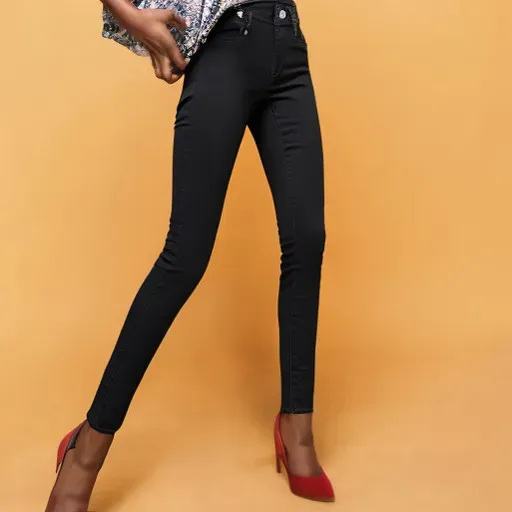 Jet black, these skinny jeans are the ultimate
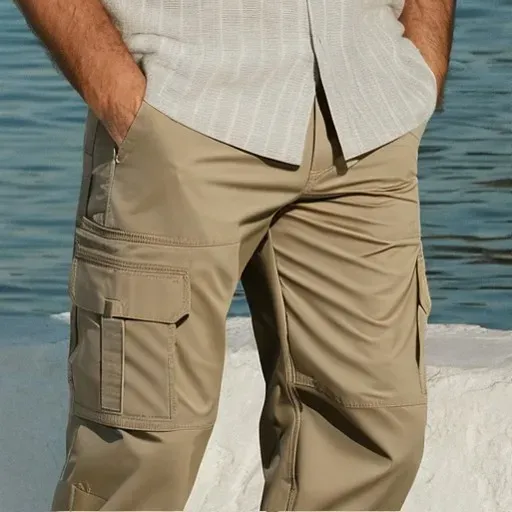 Khaki tactical pants with durable fabric and multiple
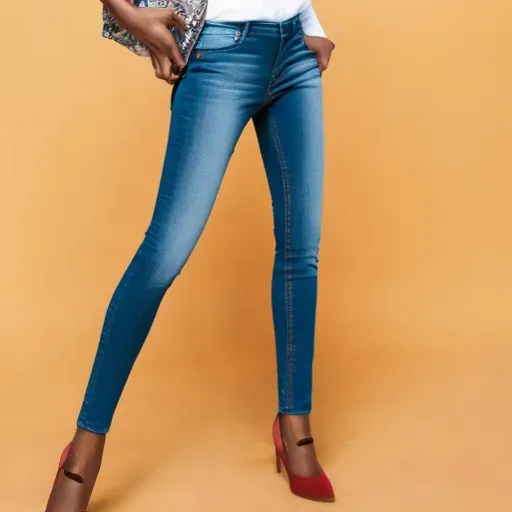 Rust red, these bold, skinny jeans make a statement
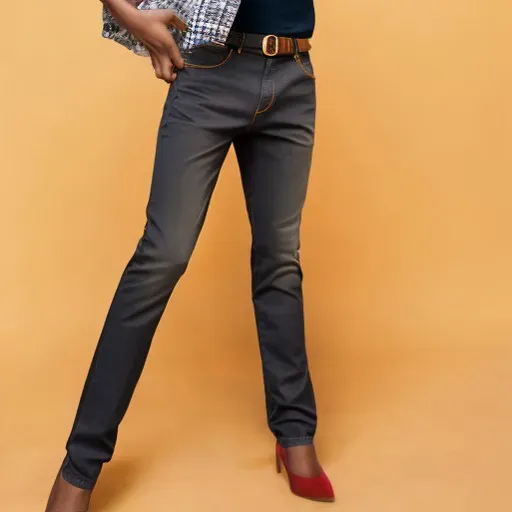 Charcoal grey
Tap any look to open it in the app on your own photo.
Related
Skirts · Chinos · Parachute and Corduroy Pants
Questions people actually ask
Where should I measure my waist for trousers?
Measure where the trousers will sit, not at your natural waist out of habit. For a high rise, that is the narrowest part of the torso. For a mid or low rise, measure across the hip bones. Keep the tape level and do not pull it tight.
Is a gap at the back of the waistband fixable?
Usually yes, and cheaply. A tailor takes in the centre back seam, which is a short job on most trousers and skirts. Gaping there normally means your waist to hip difference is bigger than the brand’s block assumes, so expect the same across that label.
Should I buy for the waist or the hip?
Buy for the hip and thigh, then have the waist taken in. Waistbands are simple to alter; hips and thighs are not, because letting them out needs seam allowance that mass produced garments rarely leave. Same logic applies to skirts.