
Knitwear splits on one question before anything else: does it open down the front. A cardigan does, a sweater does not, and that single fact decides how the garment layers.
After that it is gauge. A fine gauge knit sits close and works under a coat. A chunky cable is the outer layer whether you planned it or not.

Examples from the blog


Fibre first, pattern second
Wool is warm because each fibre is crimped, and the crimp holds pockets of still air against your body. Merino is finer and softer than standard lambswool, so it can sit close to the skin without prickling. Cashmere comes from the undercoat of goats and is warmer for its weight than sheep wool, though the fibres are short, and short fibres work loose. Fibre length predicts how a knit looks after a year.
Cotton knits breathe well and hold their shape poorly, sagging at the elbows and hem over a day. Acrylic keeps its shape and has none of wool’s ability to manage moisture, so it feels clammy once you warm up. Blends split the difference honestly enough, and a little nylon in a merino knit makes the cuffs last much longer. Check the composition label before the price, since it tells you more about the next two winters.
How to wash a sweater without shrinking it
Wool fibres are covered in tiny overlapping scales. Heat, water and agitation lock those scales together permanently, and that is felting, the reason a jumper comes out of a hot wash sized for a child. Cool water, a wool detergent and almost no movement avoid it. Hand washing is really just soaking, pressing gently and rinsing well. Machine wool cycles work when they genuinely mean cool water and a slow spin, and plenty do not.
Never wring a wet knit, and never hang one. Roll it in a towel to press the water out, then dry it flat, pushed back into its own shape. Hanging while wet stretches the shoulders permanently, because the whole weight of the water pulls down through the fabric. Folded storage is correct for exactly the same reason. Heavy knits left on hangers develop shoulder bumps that never fully come out, even after a wash and reshape.
More cardigans and sweaters to try on
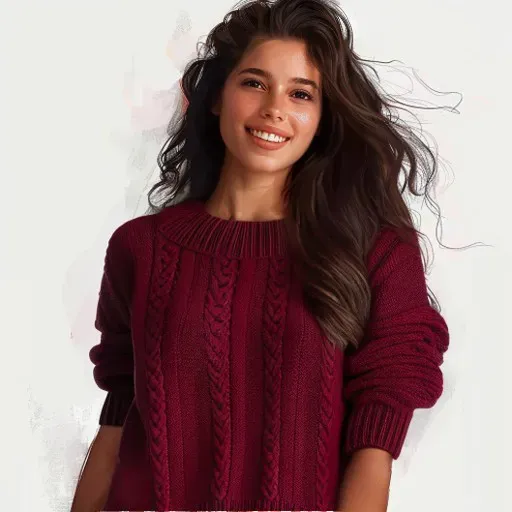 A deep burgundy cable knit sweater
 Midnight blue
 Deep burgundy
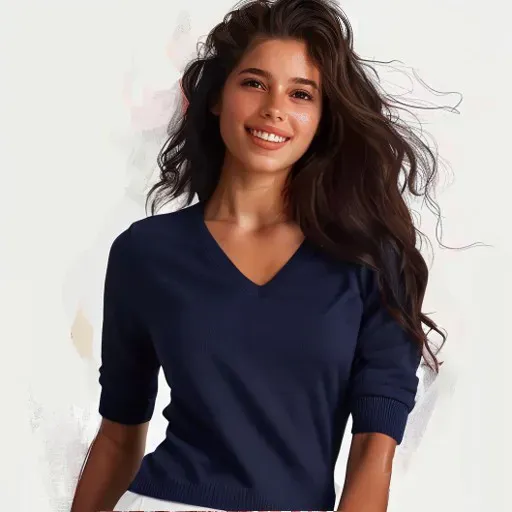 A classic navy blue cotton pullover
 Heather grey
 Charcoal black
 Earthy olive
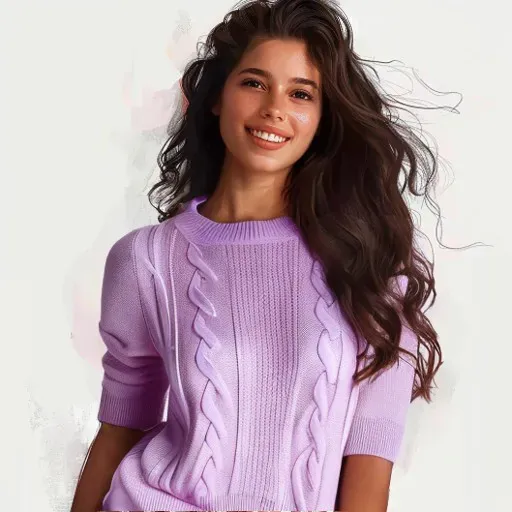 A soft lavender cable knit sweater
 A mustard yellow chunky knit pullover
 A bright yellow cable knit sweater
 A soft cream cashmere pullover
 A bright red fleece pullover
Tap any look to open it in the app on your own photo.
Related
Hoodies · Hoodie vs Sweatshirt · Blouses and Shirts
Questions people actually ask
What is the difference between a jumper and a sweater?
Nothing. Jumper is British English, sweater is American, and both mean a knit pulled over the head.
Can a cardigan replace a jacket?
A heavy gauge one can, indoors and in mild weather. It will not hold a shoulder line the way a blazer does.
Which neckline is most forgiving?
A V neck. It lengthens the upper body and breaks up a solid block of colour, which a crew neck does not.
Why does new cashmere pill so quickly?
Short fibres migrate to the surface as you wear it, and the loose ends tangle into bobbles. It happens most in the first few wears, then settles down. Remove pills with a comb or a shaver, never by pulling them off. Cheap cashmere keeps pilling because the fibres used in it are shorter still.
How should knitwear be stored over summer?
Clean, folded and sealed. Moths eat protein fibres and are drawn to body oils and food traces, so a sweater put away dirty is the one that comes out with holes. Wash everything wool before storing it, fold it into a closed box or bag, and add cedar or lavender if you like.