
Traditional dress carries meaning that everyday clothing does not. Many of these garments mark region, family, marital status or occasion, and some are reserved for ceremonies.
They are shown here to be looked at and understood, with the specific culture named in each case instead of flattened into a generic style.

Examples from the blog


Garments that mark status, region or occasion
Formality in a Japanese kimono is read from details, not from price. Sleeve length, fabric and where the pattern sits all carry information, and a furisode with long swinging sleeves is worn by unmarried young women while a married woman wears a tomesode. Black tomesode carrying family crests sits at the top of the formal scale. None of this is visible to an outsider, and all of it is obvious to someone raised with the garment.
Cloth carries identity in many traditions. Scottish tartans are tied to clans and to registered setts. Kente cloth of the Asante and Ewe peoples of Ghana uses named patterns, some of them historically reserved for royalty. Huipiles woven by Maya and Zapotec women in Mexico can identify the community that made them, and Palestinian tatreez embroidery once told you which village a woman came from. Reading cloth this way was a practical skill, not a romantic one.
What is earned, and what is not yours to wear
Certain items are earned or sacred, and no dress code makes them available. Native American regalia is made for specific dancers, often by family, and eagle feathers within it are protected by United States law and given for particular achievements. Plains war bonnets record deeds. A Sikh dastaar is an article of faith worn every day, not a decorative wrap. Asking is better than assuming here, and in most cases the answer is not complicated.
Everyday traditional dress works differently. Hosts in many cultures welcome guests who wear it on invitation, and a sari or a kurta at an Indian wedding, or a rented kimono in Kyoto, is usually received as respect. Buying from the people who make these pieces keeps the craft alive, since hand weaving and hand embroidery disappear without a market. Machine printed copies made far from the source pay nobody who knows how it should be made.
More wearing traditional dress to try on
 Chinese Cheongsam (Qipao)
 Japanese Kimono
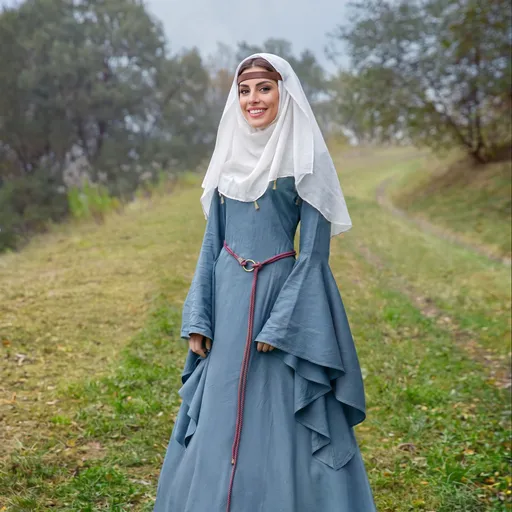 Long blue medieval gown
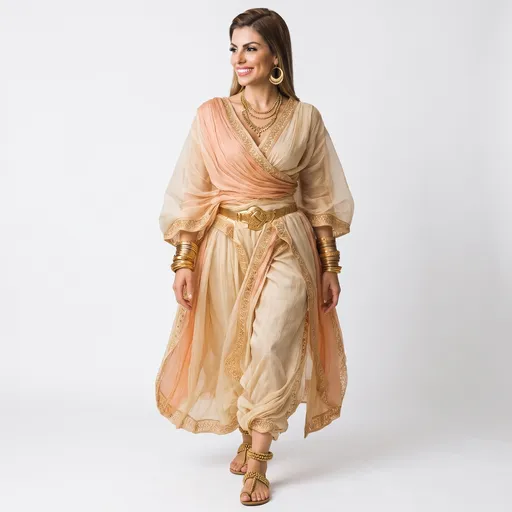 Flowy beige dress with peach accents
 Norwegian Bunad
 Bavarian Dirndl
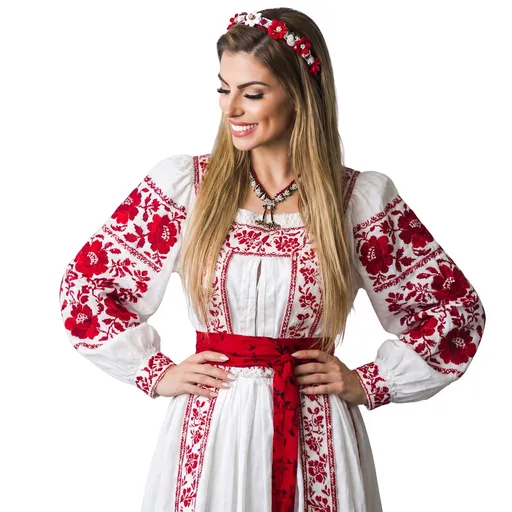 White dress with red floral embroidery
 Turkish Kaftan
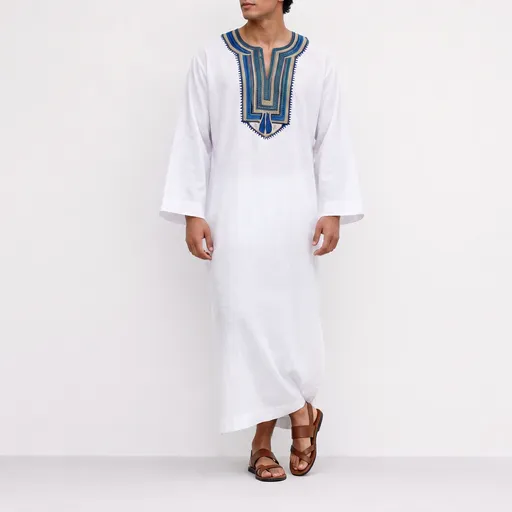 White, long-sleeve, loose-fitting tunic
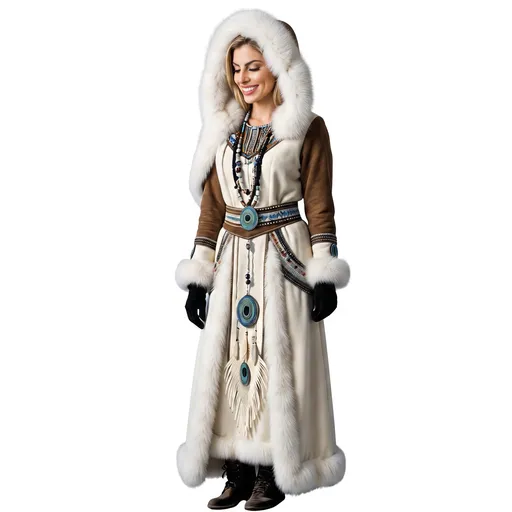 White fur-trimmed coat
 Yellow off-shoulder dress with lace detail
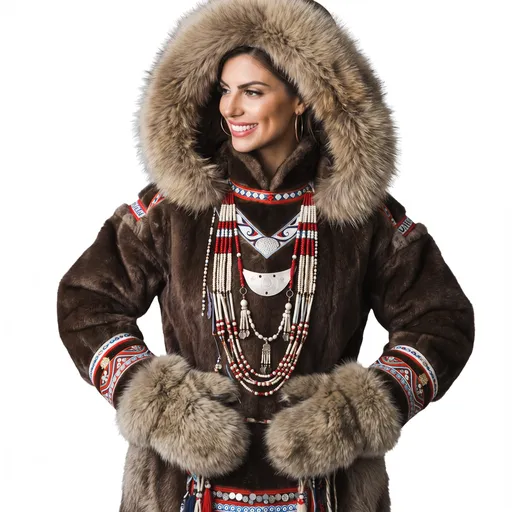 Brown fur hooded coat with elaborate beadwork
Tap any look to open it in the app on your own photo.
Related
Traditional Clothing · Kimono vs Yukata
Questions people actually ask
Is it appropriate to wear traditional dress from another culture?
It depends heavily on the garment and the context. Some are openly shared and worn by guests as a mark of respect, particularly when invited to a wedding or festival. Others are ceremonial or tied to status and are not meant for outsiders. When in doubt, ask someone from that community instead of guessing.
Why are so many traditional garments made from uncut cloth?
Handloom width decided the shape. Cloth was valuable and looms were narrow, so garments like the sari, the kimono and the huipil were built from whole panels with almost nothing wasted. Fitted tailoring, with curved seams and offcuts on the floor, became common much later and needed cheap, wide fabric.
How can I tell which region a garment comes from?
Pattern, colour and construction all encode it. A tartan sett, a tatreez motif, the weave of a huipil or the shape of an Andean hat can each point to a specific community or valley. Museums and weaving cooperatives publish these details, and the makers themselves are usually the best source.