
A dress is one word covering about a dozen unrelated decisions. Length, waist position, how the fabric meets the body and whether it fastens at all are separate choices, and any combination of them is still called a dress.
The pages below split that word into shapes you can actually shop for.

Examples from the blog


Start with the waist, then pick the length
Waist position changes a dress more than any other single seam. An empire waist sits just under the bust and hides everything below it, a natural waist marks your narrowest point, and a drop waist lands on the hip and shortens the leg. Try one of each before you decide a shape does not suit you.
Length names describe where the hem lands, not how formal the dress is. Mini stops above the knee, midi somewhere between the knee and the mid calf, maxi at the ankle or the floor. Midi is the awkward one, because a hem that cuts across the widest part of your calf will read as heavy no matter what the fabric cost.
Fabrics that hold a shape, fabrics that follow you
Some cloth stands up on its own. Cotton poplin, mikado, taffeta and heavier crepe keep whatever shape they were cut into, so an A line stays an A line whether you move or not. That structure is flattering if you want the dress to do the work, and unforgiving if you wanted it to skim.
Jersey, silk charmeuse, rayon and fine viscose do the opposite. They take the shape of whatever is underneath, which means every seam of your underwear shows up in a photograph. Bias cut fabric sits between the two: cut at forty five degrees to the grain, it stretches and drapes without any elastane in the mix.
Four fit checks worth doing in the changing room
Sit down. Half the dresses that fit standing up ride up several inches or pull across the hip the moment you fold at the waist, and you will spend most of an evening sitting. Then raise both arms: if the whole hem lifts with them, the armholes are cut too low or the shoulders are too tight.
Check where the bust darts point. They should aim at the fullest part of your chest, and if they land above or below it, no amount of taking in the sides will clear the drag lines. Last, run a finger along the zip while it is closed. Puckering there means the dress is being held shut, not fitted.
More dresses to try on
 Charcoal grey sweater dress
 Red plaid pinafore dress with a square neckline
 Women dress in deep burgundy hues
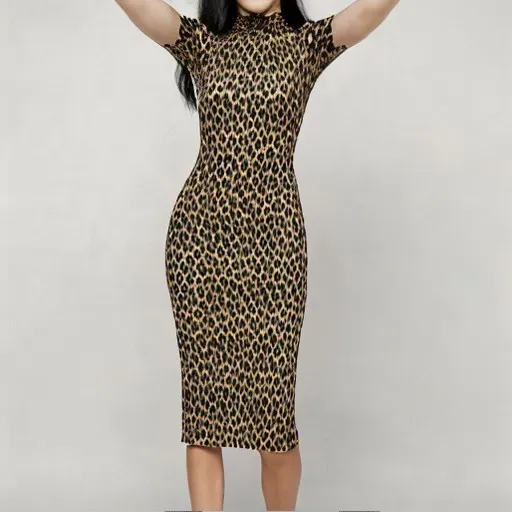 Leopard print bodycon dress with a mock neck
 Women dress in 'Meringue' Mini Dresses
 Metallic silver bodysuit with a high neckline
 Deep purple brocade dress with a fitted bodice
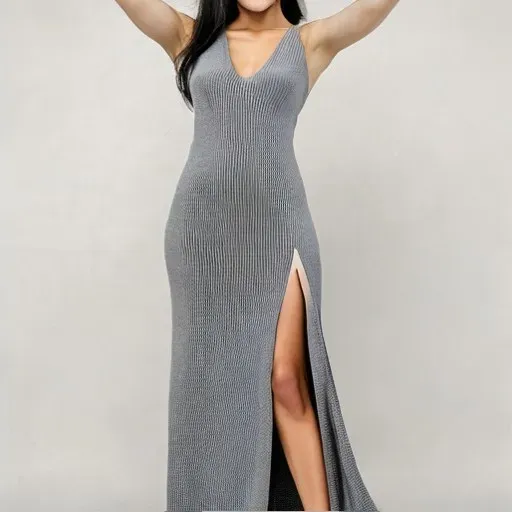 Light grey knit maxi dress with a side slit and cowl
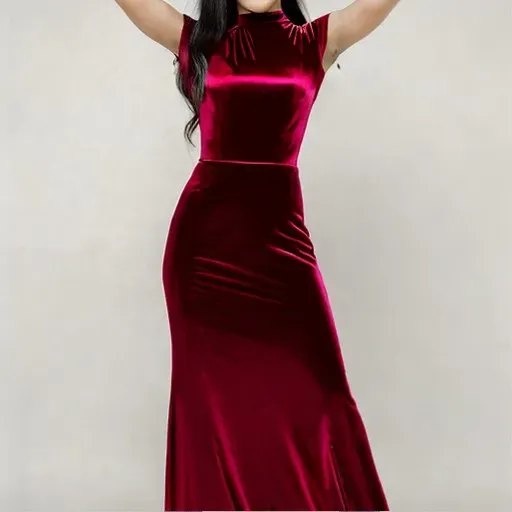 Ruby red velvet dress with a mock neck and long
 Royal blue off-the-shoulder top with a smocked bodice
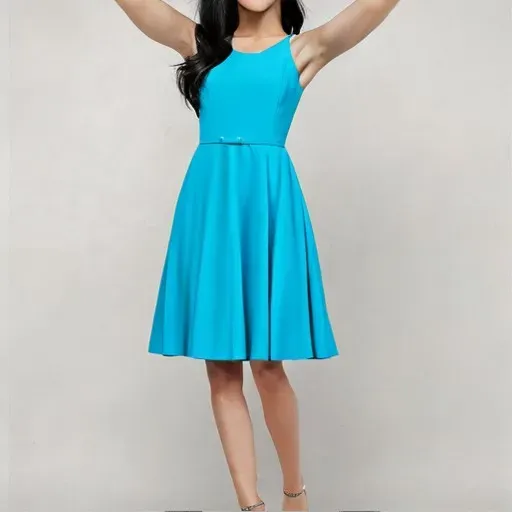 Bright turquoise fit-and-flare dress
 Bright yellow fit-and-flare dress
Tap any look to open it in the app on your own photo.
Related
Wedding Dresses · Cocktail Dresses · Sundresses · Maxi Dresses · Color Analysis
Questions people actually ask
How many dresses does a wardrobe actually need?
Fewer than most people own. Two that handle work or smart daytime, one that survives a wedding or a party, and one casual shape you reach for without thinking covers almost everything. Anything past that should earn its place by doing a job the other four cannot.
Why does the same size fit differently in two dresses?
Dress sizes are cut to a block, and every brand draws its own. One label may draft for a longer torso or a fuller bust at the same nominal size. Measuring your bust, waist and hip and reading the brand’s own size chart beats trusting the number on the tag.
Can one dress cover more than one dress code?
Yes, if it is plain and the length is right. Something knee to mid calf in a solid matte fabric moves between office, dinner and an afternoon event on shoes and jewellery alone. Shine, sequins and very short hems lock a dress into one setting.