
Knitwear terminology is the messiest in fashion. A hoodie is a sweatshirt with a hood, a jumper is a sweater in British English, and a cardigan is defined entirely by opening down the front.
Names aside, these are the layers you reach for most, so the fit is worth getting right.

Examples from the blog


Read the fibre label before the size label
Merino is fine enough to wear against the skin and handles a warm room without turning clammy. Lambswool is warmer and bulkier but scratchier. Cashmere is the softest and the most fragile, and it pills fastest wherever something rubs. Cotton is comfortable and cool but stretches at the elbows and will not spring back.
Acrylic is not automatically bad. It holds colour, costs little and survives a washing machine, but it traps moisture, melts under a hot iron and pills badly in cheap versions. Blends are usually the honest answer: wool with a little nylon lasts far longer at the cuffs than pure wool does.
Why knitwear goes wrong after a few washes
Pilling comes from friction, not from poor quality alone, so it shows up first under the arms, along the side where a bag strap rubs, and across the seat if you wear a long cardigan. A cheap fabric shaver or a knit comb takes it off in minutes and the garment looks new again.
Hanging is what ruins shape. Wet or heavy knit stretches under its own weight and the shoulders end up with permanent points. Fold everything knitted, wash cool on a gentle cycle, dry flat on a towel. Cuffs and hems that have gone slack rarely recover, so keep them out of the tumble dryer.
How thick a layer do you actually need?
Thickness should be chosen against whatever goes over the top. A chunky cable knit under a tailored coat binds at the armhole and makes both garments look wrong. Fine gauge merino disappears under a jacket and still adds real warmth, so it is the more useful buy if you own structured outerwear.
Sweatshirt fleece is sold by weight instead of gauge. Lighter loopback fabric sits close to a long sleeved tee and works indoors or in spring. Heavier brushed fleece is a proper cold weather layer that will not fit under a slim jacket. Check the gsm figure whenever a listing gives one.
More knitwear and hoodies to try on
 Charcoal grey
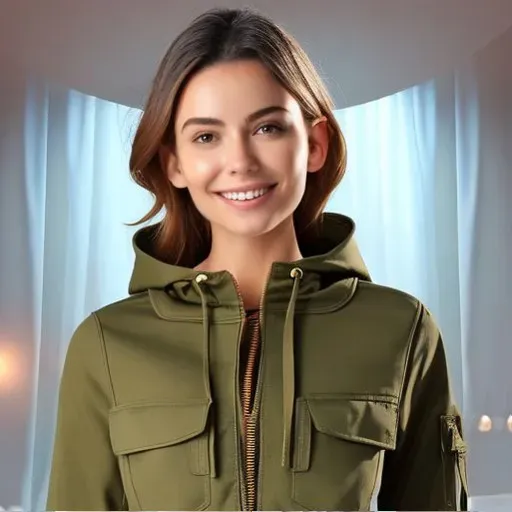 Olive green, this military-inspired hoodie blouse is
 Midnight blue
 Deep burgundy
 Mustard yellow
 Pastel blue, this hoodie blouse radiates serene
 Electric blue
 Dusty pink, this hoodie blouse offers a soft
 Soft pastel pink
 Neon yellow, this electrifying hoodie blouse is
 Crimson red, this hoodie blouse offers a vibrant
 Charcoal black
Tap any look to open it in the app on your own photo.
Related
Hoodies · Cardigans and Sweaters · Hoodie vs Sweatshirt · Fabric Types
Questions people actually ask
Why does my sweater pill so quickly?
Short fibres work loose and tangle at friction points. Cashmere and softer lambswool pill more because those fibres are shorter and finer, so pilling on its own is not proof of a bad garment. Shave it, wash it inside out and less often, and it settles after the first season.
Hang or fold?
Fold. Knitted fabric has no woven structure to resist gravity, so a hanger slowly pulls the shoulders into a shape they will keep. If drawer space is short, fold the garment over a wide padded hanger so the weight spreads along the bar instead of hanging from two points.
What is the quickest way to judge quality on a rail?
Look at the ribbing and the seams. Firm cuffs that spring back, patterns that match at the side seams, and knitted on bands instead of sewn on strips all point to better construction. Hold the knit up to a light too: visible gaps mean a loose, thin fabric.