
Business casual is a dress code defined almost entirely by what it excludes. No suit, no tie, no jeans in most offices, and past that the rules are local.
The safest reading is a collar, a trouser that holds a crease, and a shoe that is not a trainer. Everything below sits inside that.

Examples from the blog


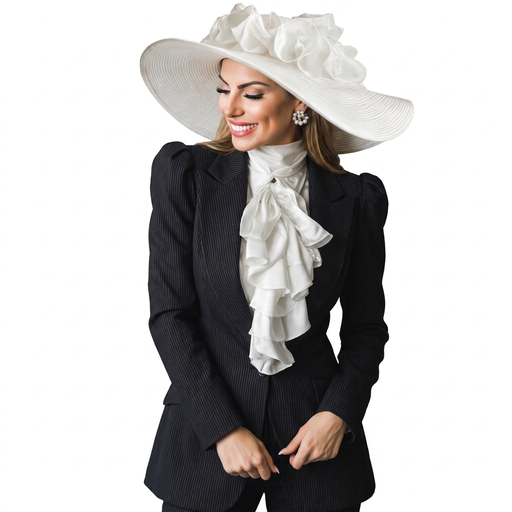


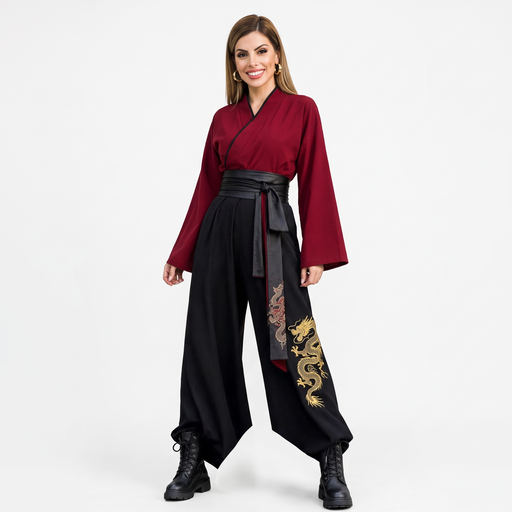
The one-step rule
If you are unsure, dress one step above what you think the room will wear. Being slightly overdressed reads as effort. Being under is the only version anyone comments on.
Read the office before you buy anything
Written dress codes describe intentions. People describe reality, so spend a first week watching what actually gets worn. Look one level above your own, since that is where the code is enforced most visibly, and note what changes on days with clients in the building. Copy the middle of what you see, not the loosest or the sharpest end of it. Buying anything before that week is guessing, and returns are harder than patience.
Industry sets a baseline you cannot argue with. Law and finance run formal, agencies and product teams run loose, and anyone client-facing gets pulled upward regardless of which team they sit in. Hybrid work shifted this too. Fewer days in the building means each one carries more signal, so the in-person day now tends to be dressed a step above the old daily norm. Sector norms move slowly, so a rule you learn once tends to hold for years.
Clothes that survive a whole day
Wool and wool blend trousers hold a crease through eight hours of sitting because the fibres spring back. Cotton chinos crumple at the hip and the back of the knee by lunchtime, which is fine in a relaxed office and obvious in a formal one. Linen wrinkles on purpose, and those wrinkles read as relaxed, quietly lowering the formality of everything else. Weight matters too, since a lightweight wool travels and sits better than a heavy one.
Shirt cloth carries the same logic. Poplin is smooth and reflects light, so it reads crisp and formal. Oxford cloth has a visible basket weave and sits a clear step down, and that is what makes an oxford button-down the workhorse of smart casual. Shoes finish the argument, since a leather sole is dressier than rubber and a loafer costs you almost nothing in formality. Colour does less work here than texture and cloth do.
More business casual to try on
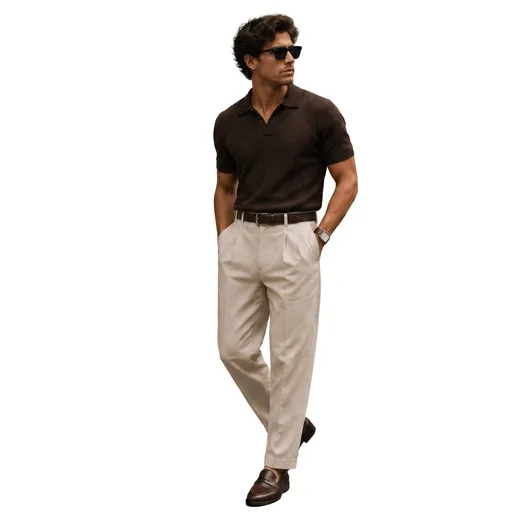 Dark brown knit polo
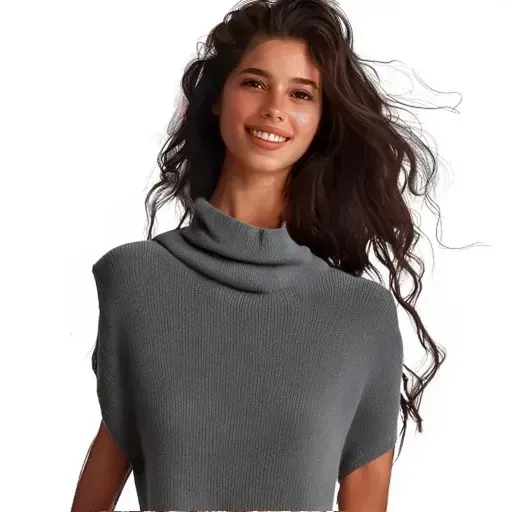 Ivory knit sweater in soft merino wool with a textured
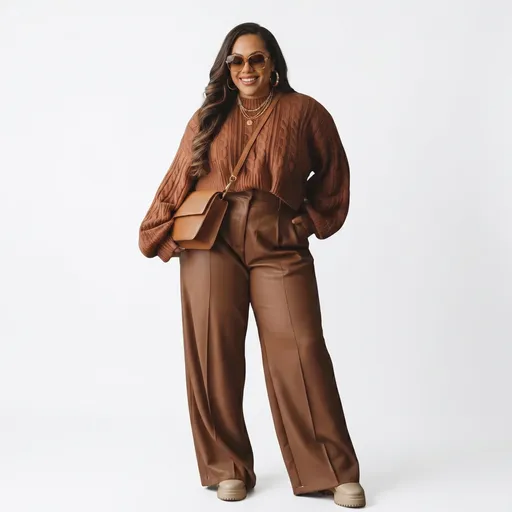 Brown cable-knit sweater
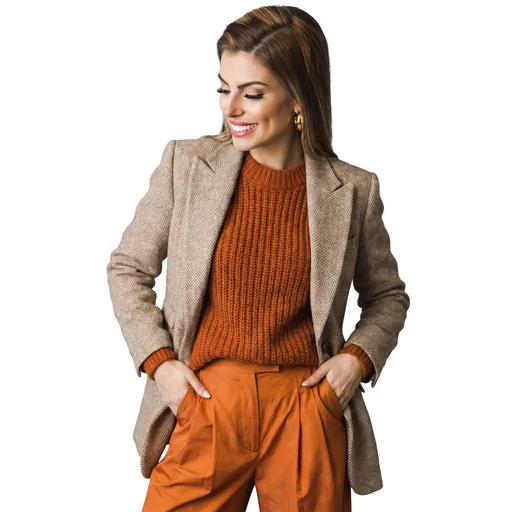 Beige herringbone blazer
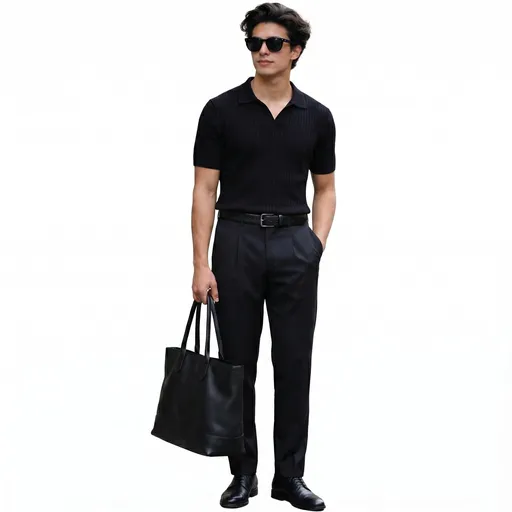 Black short sleeve polo shirt
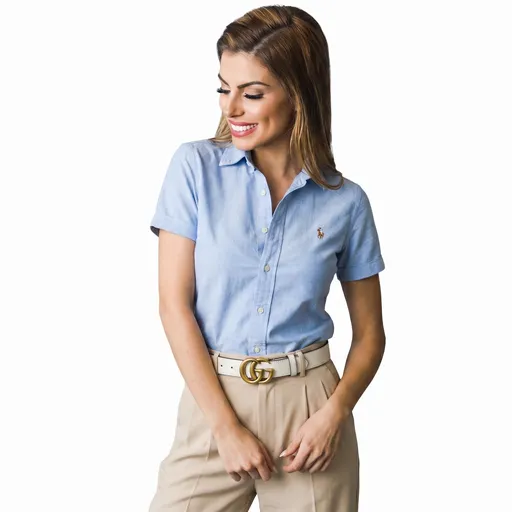 Light blue button-up shirt
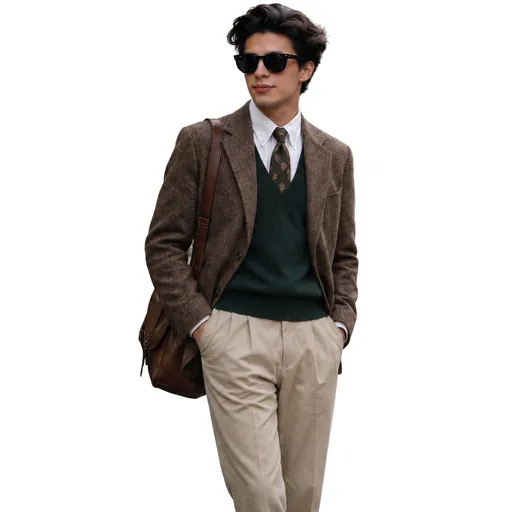 Brown blazer
Tap any look to open it in the app on your own photo.
Related
Blazers · Chinos · Business Casual vs Smart Casual · Dress Codes Compared
Questions people actually ask
Are jeans business casual?
In tech and creative offices, dark indigo with no distressing usually passes. In finance, law and most client-facing roles they do not.
Do I need a blazer?
No, but it is the single fastest way to make a casual outfit read as business casual, and it can come off once you have read the room.
Is smart casual dressier than business casual?
They overlap, but they point in different directions. Business casual is office clothing with the tie removed, so it leans conservative. Smart casual is casual clothing pulled upward, so it allows knitwear, texture and clean trainers. Similar formality, different starting point, and smart casual leaves more room to be personal.
What shoes work in most business casual offices?
Leather loafers, derbies or clean Chelsea boots in brown, black or dark tan. Brown is more versatile than black in a business casual setting, since black leans formal. Keep them polished, because scuffed shoes undercut everything above them faster than any other single item in the outfit.