
A suit is the most structured thing most people own, so fit matters fit matters more here than in any other garment. The shoulder is the one part a tailor cannot fix cheaply, so it is the part to judge first.
A tuxedo is not a fancier suit. It is a separate garment with satin facings, and it belongs to one specific dress code.

Examples from the blog
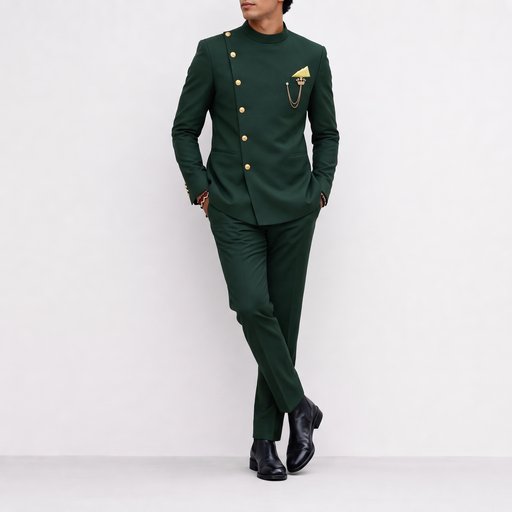
Where black tie came from
Dinner jackets began in the 1860s as a short, informal alternative to tailcoats, cut on Savile Row for the Prince of Wales. Americans took the shape to the wealthy enclave of Tuxedo Park in New York, and the name stuck there and nowhere else. Britain still calls it a dinner jacket, and the garment in question is exactly the same one. Everything else about black tie was standardised around that jacket over the next fifty years.
Silk facings on the lapels are the whole point of difference. Grosgrain and satin catch low light in a way flat wool cannot, and evening clothes were designed for candlelight and gas lamps. Braid or satin running down the outside of the trouser leg carries that effect to the floor. Studs and a covered waistband follow the same logic of hiding hardware. Peak lapels and shawl collars both belong to the tradition, and neither one is more correct.
Rest it, brush it, wear it for a decade
Wool needs a day between wearings to recover its shape, and two days is better in humid weather. Rotating two suits stretches the life of both, since fibres compressed and creased day after day stop springing back at all. Hang trousers from the hems in a clamp hanger so gravity pulls the crease straight while they rest. Cedar hangers help in a wardrobe that gets little air, though the shape of the hanger matters more than the wood.
Brush the jacket down after each wear, working from the shoulders towards the hem. Grit ground into wool cuts it from the inside, and that is what wears a suit out long before any seam gives way. Steam creases out over a bath instead of pressing them flat, and keep dry cleaning for stains and for the end of a season. Trouser hems collect the most grit of anywhere, so brush them last and brush them hardest.
| Lapel | Found on | Reads as |
|---|---|---|
| Notch | Most business suits | Standard, safe, daytime |
| Peak | Double breasted, tuxedos | Formal, assertive |
| Shawl | Tuxedos, dinner jackets | Evening only |
More suits and tuxedos to try on
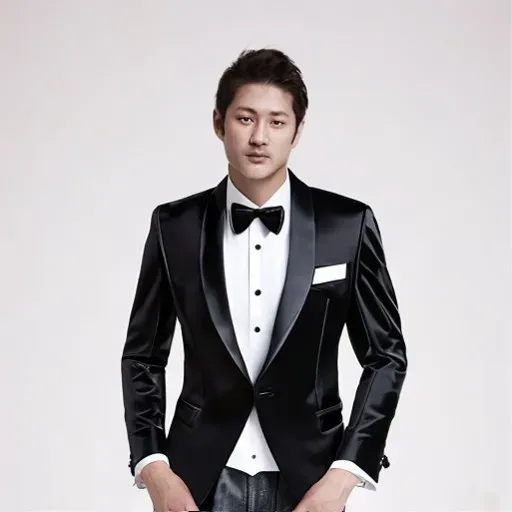 White dinner jacket with black satin lapels
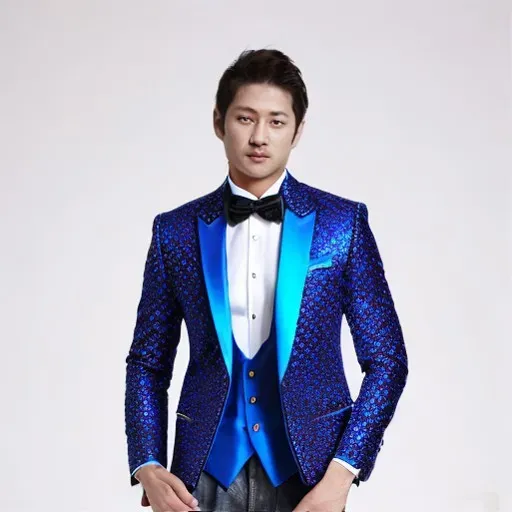 Electric blue suit with LED light trimmings along
 Light grey power suit
 Charcoal grey power suit
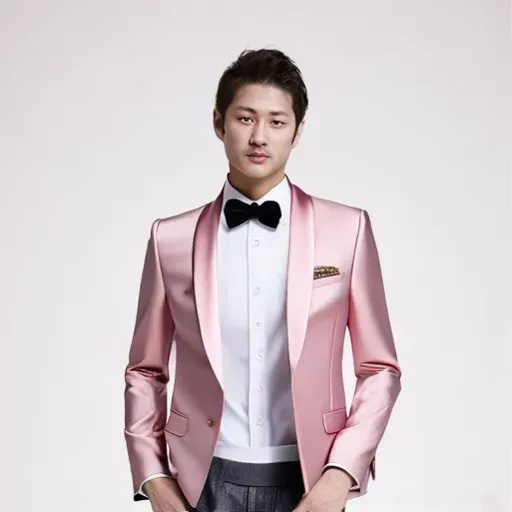 Pastel pink suit with a satin shawl collar
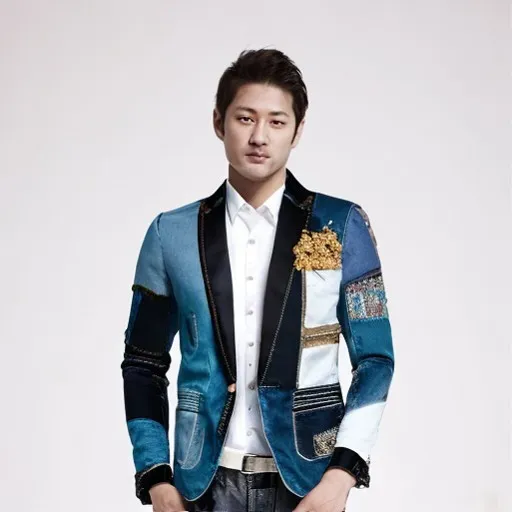 Patchwork denim suit combining different washes
 Royal blue power suit
 White linen power suit
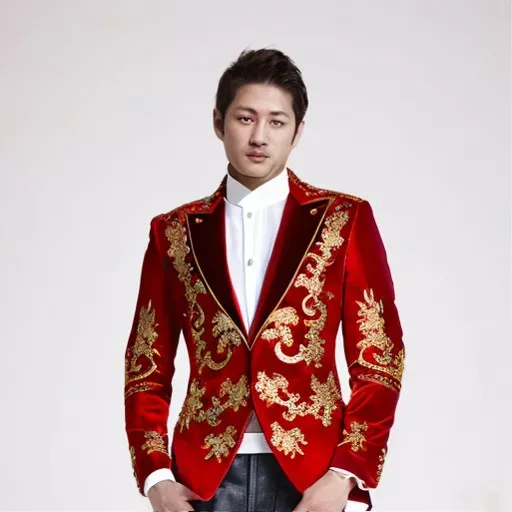 Opulent red velvet suit with gold embroidered dragons
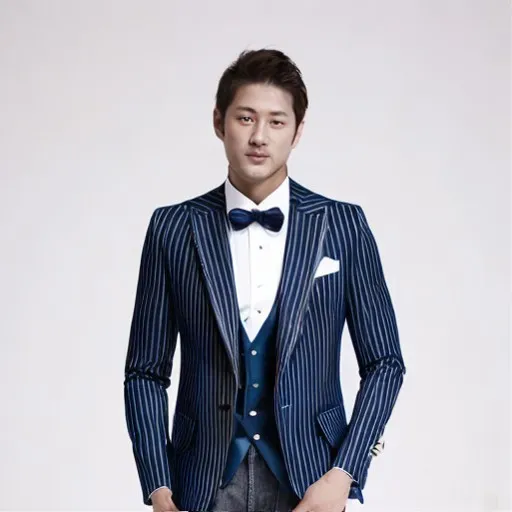 Navy blue three-piece suit with a pinstripe pattern
 Classic black wool power suit
 Dark grey pinstripe power suit
Tap any look to open it in the app on your own photo.
Related
Suit vs Tuxedo · Blazers · Blazer vs Suit Jacket · Dress Codes Compared
Questions people actually ask
How do I know if the shoulder fits?
The seam should end where your shoulder ends. If it hangs past, no amount of tailoring elsewhere will rescue the line.
Is a black suit the same as a tuxedo?
No. A tuxedo has satin on the lapel and a satin stripe down the trouser leg. A black suit has neither.
How often should a suit be dry cleaned?
Twice a year for something worn weekly, less for anything that comes out a few times a season. Solvents pull the natural oils out of wool and leave it brittle, so every clean costs you a little cloth. Spot clean marks, air the jacket out, and clean the whole thing only when it needs it.
Why do people recommend midnight blue for black tie?
Under artificial light, true black can look slightly dusty or greenish, while midnight blue reads as a deeper black than black itself. It was the standard choice in the era of evening clothes worn under low light, and it still photographs well. Either colour is correct for black tie.