
Most clothing traditions are older than the countries they sit in, and the names arrive with rules that a product photo will never explain. A sari is one uncut length of cloth. A hanbok changes colour depending on who is wearing it and when. A Sámi gákti tells other Sámi which valley a family comes from.
Each section below covers one tradition, names the garments and then sends you to every post the blog has on it. The app renders these on your own photo, so the shape is visible before anything is bought or borrowed.
African Dress · Indian and South Asian · Slavic Folk Dress · Latin American Folk · Egyptian · Cowboy and Western · Korean Hanbok · Arctic Indigenous · Japanese Kimono

| Tradition | Garments to know | Usually worn for |
|---|---|---|
| West and East Africa | Agbada, boubou, kente, kanga, shuka | Weddings, naming ceremonies, church, festivals |
| India and South Asia | Sari, kurta, sherwani, lehenga, dhoti | Daily wear, weddings, temple visits |
| Slavic Europe | Vyshyvanka, sarafan, embroidered linen shirt | National holidays, weddings, folk ensembles |
| Latin America | Huipil, pollera, charro suit, ruana | Market days, patron saint festivals, dance |
| Egypt | Galabeya, kaftan, milaya laff, tarboosh | Everyday wear, Ramadan evenings, weddings |
| American West | Snap shirt, bootcut jeans, boots, felt hat | Rodeos, country dance, ranch work |
| Korea | Hanbok: jeogori, chima, baji, durumagi | Seollal, Chuseok, weddings, first birthdays |
| Arctic | Amauti, caribou parka, kamik boots, gákti | Cold weather, community gatherings |
| Japan | Kimono, yukata, obi, haori, hakama | Festivals, tea ceremony, coming of age, weddings |
Traditional African Clothing
Africa is fifty-four countries and several thousand language groups, so „African clothing” names a continent and not a style. What travels across most of West Africa is the robe cut from woven strips or printed cotton: the Yoruba agbada, the Senegalese boubou, the Ghanaian kente wrapper carried over one shoulder. East Africa leans on rectangular cloth instead, tied and not tailored, like the Maasai shuka or the Swahili kanga.
The bright wax print most people picture is younger than it looks. Dutch mills copied Indonesian batik in the nineteenth century, failed to sell it in Asia and found a market in West Africa, where the patterns were redrawn locally and given names. A single cloth can carry a proverb, a political slogan or a wedding date.
Try a Maasai shuka on your own photo


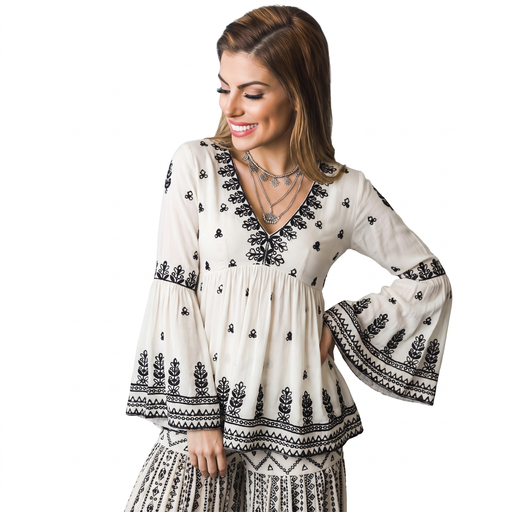
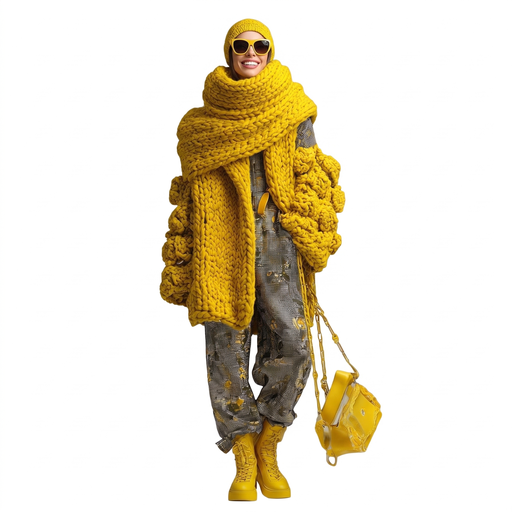
Browse all 26 posts in African Dress →
Traditional Indian Clothing
The oldest garments in South Asia are draped, never sewn. A sari is five to nine metres of uncut cloth, pleated at the waist and thrown over one shoulder, and the way it is wrapped shifts every few hundred kilometres. The dhoti works the same way for men. Stitched clothing arrived later and settled next to it: the kurta, the salwar kameez, the sherwani, the lehenga choli kept for weddings.
Occasion sets the fabric more than the cut does. Handloom cotton for daytime, silk shot with zari thread for a wedding, and a dupatta that covers the head inside a temple and hangs loose outside it. Guests at an Indian wedding read the weave before they read the shape.


Browse all 17 posts in Indian and South Asian →
Slavic Traditional Dress
Slavic folk dress is built from three pieces across a very large area: a white linen shirt, something layered over it, and a head covering that announces marital status. The embroidery is what changes. Ukrainian vyshyvanka patterns differ by oblast, Polish folk dress differs between Kraków and Łowicz down to the width of a stripe, and Russian sarafans vary by river system.
Colour and stitch carried meaning the wearer never had to explain. Red for life and protection, black for earth and mourning, geometric motifs concentrated on collar and cuffs where clothing opens and, in older belief, needed guarding. An unmarried woman wore a wreath or a loose braid; after the wedding her hair went under a cap.
Try a vyshyvanka on your own photo


Browse all 14 posts in Slavic Folk Dress →
Latin American Folk Dress
Latin American folk dress is mostly Indigenous weaving under a Spanish silhouette. The huipil, a tunic woven on a backstrap loom, predates the arrival of Europeans by centuries and is still made in Maya communities across Mexico and Guatemala. The layered skirt beside it, the pollera, is colonial in cut. The two have been worn together so long that the join stopped being visible.
Pattern is local to the point of working as an address. A Guatemalan huipil’s motifs can name the village it was woven in, and in the Andes the aguayo carrying cloth and the shape of the hat do the same job. Charro suits and gaucho bombachas started on horseback and ended up as festival dress.
Try a Mexican huipil on your own photo


Browse all 14 posts in Latin American Folk →
Egyptian Traditional Clothing
Two different things get searched under this name. One is the pharaonic wardrobe from the museum: pleated linen, the kalasiris sheath, broad beaded collars, worn three thousand years ago. The other is what Egyptians wear now, and that is the galabeya, an ankle-length robe with wide sleeves, cut loose enough for air to move underneath.
The everyday version is plain cotton. The festive one carries embroidery down the chest and at the cuffs, and in Upper Egypt men pair it with a wide sash and a skullcap. Town dress for women historically added the milaya laff, a black wrap thrown over the whole body and held closed under one arm.
Try a galabeya on your own photo


Browse all 7 posts in Egyptian →
Cowboy and Western Wear
Every part of the cowboy outfit started as equipment. Pearl snap buttons tear open instead of catching on a saddle horn. The yokes across the shoulders add fabric exactly where the arms move. Boots have a high heel so the foot cannot slide through the stirrup, a pointed toe so it finds the stirrup at all, and no laces to snag.
The hat follows a season and not a mood: straw through summer, felt from autumn onwards. Fit is the only difficult part of dressing western today, since bootcut jeans exist to sit over the boot shaft, and a cropped or skinny leg breaks the line the whole outfit is built on.
Try a suede cowboy hat on your own photo


Browse all 7 posts in Cowboy and Western →
Korean Hanbok
A hanbok is two pieces and a knot. Women wear the short jeogori jacket over the high-waisted chima skirt, men wear the same jacket over baji trousers, and the outfit is held together by the goreum, a long ribbon tied at the chest. The line is deliberate: empty space at the waist, volume below it, nothing tight anywhere.
Colour did the talking under the Joseon dynasty. Commoners wore undyed white, bright pigment marked rank, and children got saekdong sleeves striped in five colours for luck. Most Koreans now keep a hanbok for Seollal, Chuseok, weddings and a child’s first birthday, while lighter saenghwal hanbok versions turn up as ordinary clothing in Seoul.
Try a hanbok on your own photo


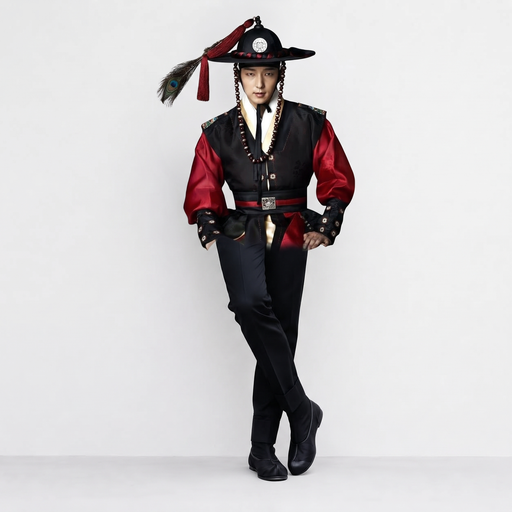

Browse all 6 posts in Korean Hanbok →
Arctic Indigenous Dress
Clothing in the Arctic is survival gear with several thousand years of iteration behind it. Inuit parkas were sewn from two layers of caribou hide, fur turned inward against the skin and outward on top, with a hood edged in wolverine because frost brushes off it. The amauti carries a baby in a pouch at the back, inside the mother’s own warmth.
The Sámi gákti further east is a different case. Band colours, buttons and the cut of the collar identify family and region, and it is worn today at weddings, confirmations and reindeer markings. It is not a costume, and Sámi communities have pushed back hard on copies sold as fashion. Look at it here, and buy from Sámi makers if you want one.
Try a fur-trimmed parka on your own photo


Browse all 5 posts in Arctic Indigenous →
Traditional Japanese Clothing
Kimono means the T-shaped silk robe, the obi belt holding it shut and roughly two hours of help getting into it. Yukata is the cotton version with no lining and no underlayer, worn to summer festivals and along ryokan corridors. Haori jackets and hakama trousers go over either one. A single rule never bends: left panel over right, because the reverse dresses the dead.
Formality is legible in the sleeve and the crest. Long furisode sleeves mark an unmarried young woman, five family crests mark the most formal version, and a plain komon with a small repeating pattern sits closer to a good dress than to a gown.
Try a kimono on your own photo
Kimono and yukata, side by side


Browse all 3 posts in Japanese Kimono →
More traditional garments to try on
 Pakistani Shalwar Kameez
 Chinese Cheongsam (Qipao)
 Scottish Kilt
 Samoan Puletasi
 Polish Folk Dress
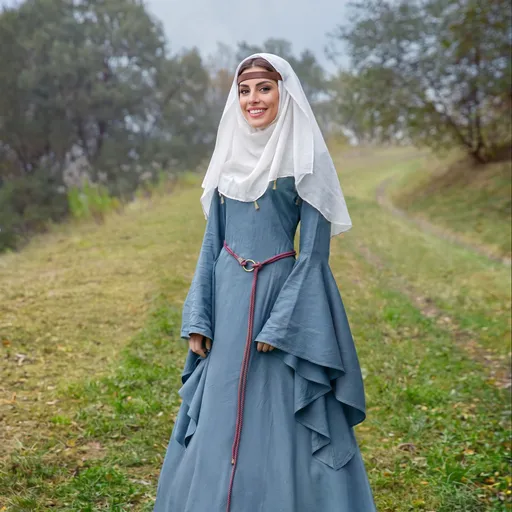 Long blue medieval gown
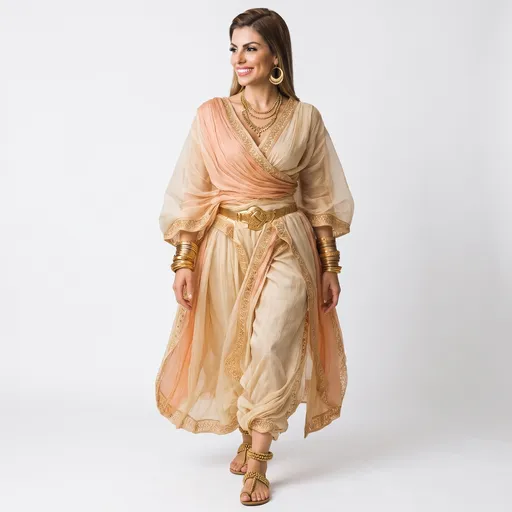 Flowy beige dress with peach accents
 Norwegian Bunad
 Bavarian Dirndl
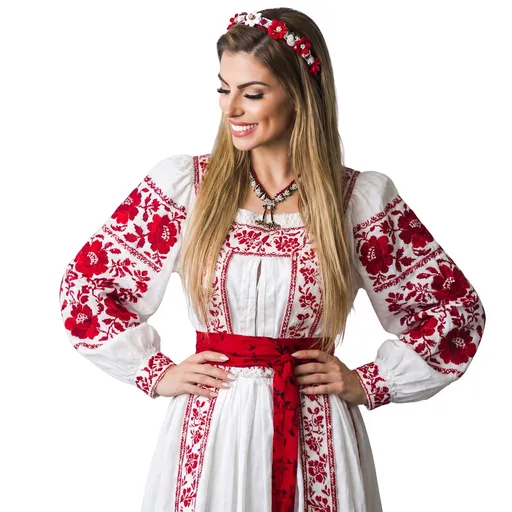 White dress with red floral embroidery
 Turkish Kaftan
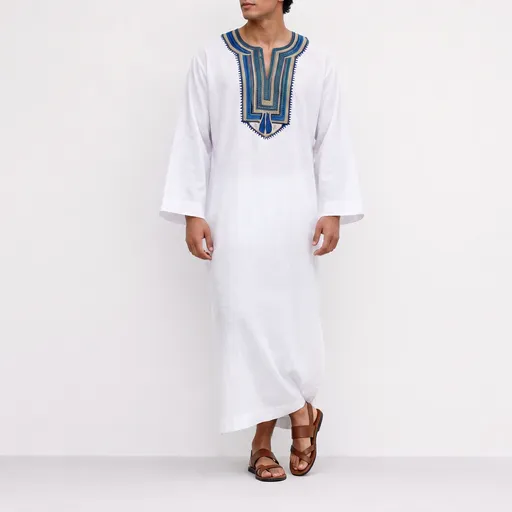 White, long-sleeve, loose-fitting tunic
Tap any look to open it in the app on your own photo.
Related
Wearing Traditional Dress · Kimono vs Yukata · Styles and Occasions
Questions people actually ask
Is traditional clothing the same thing as a costume?
No, and the difference decides how you should treat it. A costume is worn to play someone else for an evening. Most garments on this page are current clothing with a calendar: a galabeya on a Tuesday, a hanbok at Seollal, a vyshyvanka on Independence Day. Buying one as a party outfit is where offence usually starts.
Which of these are still worn day to day?
The galabeya and the kurta never stopped being ordinary clothes. Saris are daily wear for millions of women, particularly outside the big Indian cities. Hanbok, vyshyvanka, huipil and gákti moved to holidays and ceremonies, and western wear splits in two, since boots and snap shirts are still work clothing in ranching country.
What should a guest wear to an Indian or Nigerian wedding?
Ask the family, because both cultures usually want guests to join in and will say so. Indian weddings expect colour and cover: a kurta or a saree or lehenga, no white, no black. Nigerian weddings often set an aso ebi, one fabric that guests have made up into their own outfits, and the couple will send it to you.
How accurate are the renders in the app?
They read as the style, not as a museum reproduction. Cut, drape and colour come out close enough to judge whether a shape suits you. Ceremonial detail that carries meaning, like a specific region’s embroidery or a family’s gákti banding, is exactly what a model does not get right.