
Bridal shopping runs on four or five silhouette names, and most people meet them for the first time in the fitting room, wearing something they cannot judge objectively while a consultant watches.
Seeing the shapes beforehand turns that appointment into a shortlist instead of an education.

What a fitting appointment should actually test
Sample gowns come in a narrow range of sizes and are held on you with clips at the back, so the front can look immaculate while nothing is really fastened. Ask how much is clipped before you judge anything. Then sit down on a hard chair for a full minute, stand up, and look at where the bodice has travelled. Strapless bodices that slide once will slide all evening.
Raise both arms as if hugging someone tall. If the whole dress lifts with your shoulders and the hem comes off the floor, the bodice is gripping your skin instead of being held up by structure. Walk a circuit of the room, turn sharply, and climb two steps if there are any. Most problems with a gown appear in the first thirty seconds of movement, not in the mirror.
Weight, boning and the parts you cannot see
Bridal gowns hide their engineering inside the lining. Run a hand around the inside of the bodice: you want to feel vertical bones sitting in stitched channels, firm and evenly spaced, not thin plastic strips sliding loose between layers. A skirt hem that falls in a clean bell usually has horsehair braid sewn into it. One that collapses inward against your legs has nothing holding the shape out.
Weight decides how the day feels. Lift the skirt at the waist seam and notice how much load that one seam carries, because your hips carry it for the rest of the night. Heavy beading and many layers of tulle add up fast. Satin also shows every fingerprint and crushes where you sit, while textured fabrics and tulle forgive both. Match the fabric to how long you will be standing.
| Silhouette | Where it narrows | Flatters |
|---|---|---|
| A-line | At the waist, then flares | Almost everyone |
| Ball gown | Fitted bodice, full skirt | Defined waist, formal venues |
| Mermaid | Knee | Hourglass shapes, confident walkers |
| Sheath | Nowhere, falls straight | Slim frames, relaxed venues |
More wedding dresses to try on
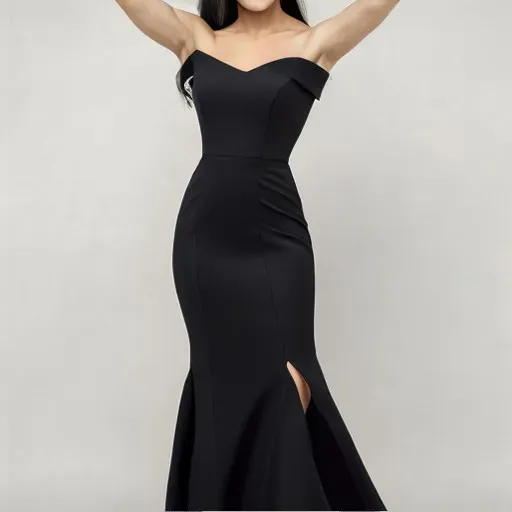 Classic Black
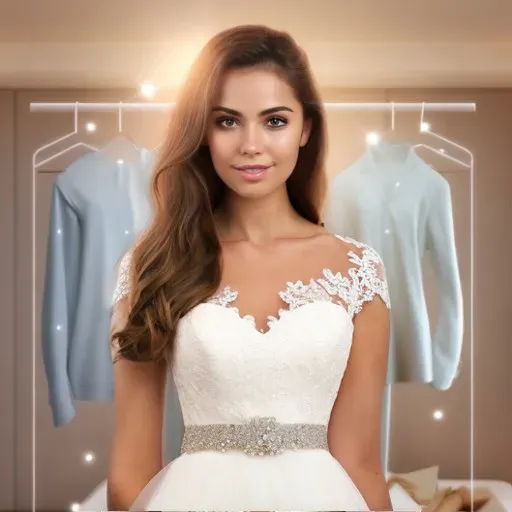 Two-tone wedding dress with a white lace bodice
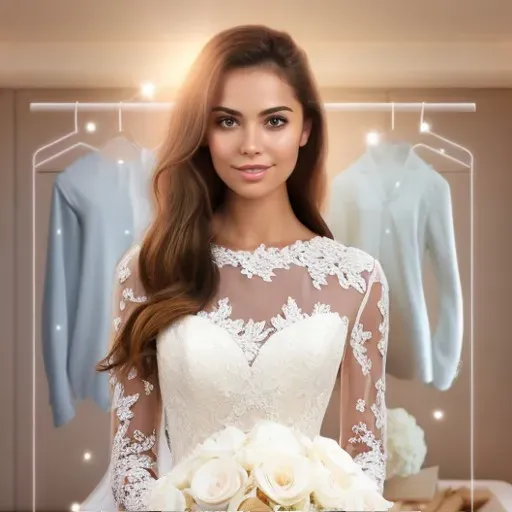 Vintage-inspired lace mermaid gown
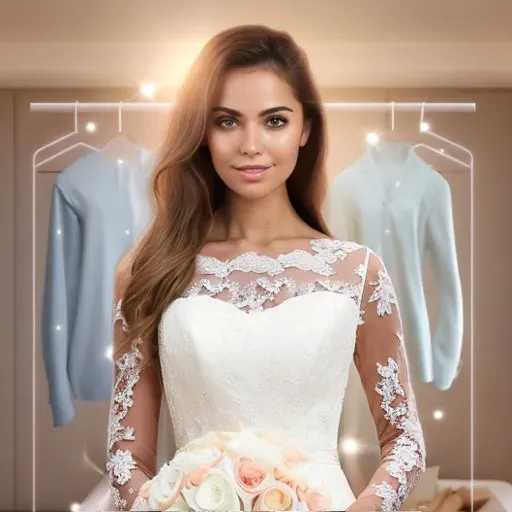 Sophisticated fit-and-flare dress
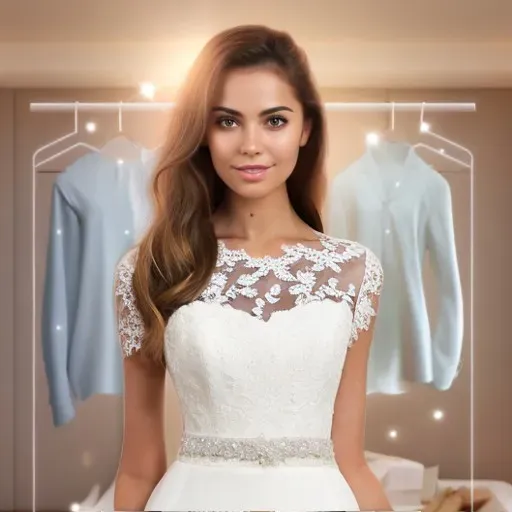 Short wedding dress with a vintage flair
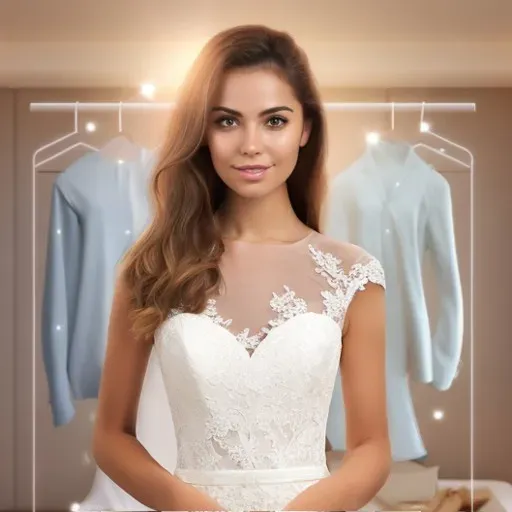 Rustic-inspired lace and tulle A-line dress
Tap any look to open it in the app on your own photo.
Related
Maxi Dresses · Cocktail Dresses · Wedding Guest Outfits
Questions people actually ask
Which silhouette suits the most body shapes?
A-line. It marks the narrowest point of the torso and skims everything under it, and most shops start there for that reason.
Can you walk properly in a mermaid dress?
You can, but the knee is restricted by design. Try stairs in the fitting room before deciding.
Does the shop sample tell me how my dress will fit?
Not directly. Samples exist in a limited size range and get clipped at the back to hold them on the body, so the front reads perfectly while the back is open. Ask the consultant how much is being clipped, then judge only the silhouette and the length from what you see.
Is buying a wedding dress online realistic?
Possible, but plan for alterations from the moment you order. Bridal sizing runs on its own scale, and a structured bodice only works when the boning lands where your body actually is. Order early, budget for a seamstress, and skip heavily corseted styles unless returns are simple.